

Blog
Silicone Sealant Buying Guide for Bangladesh: How to Choose the Right Sealant

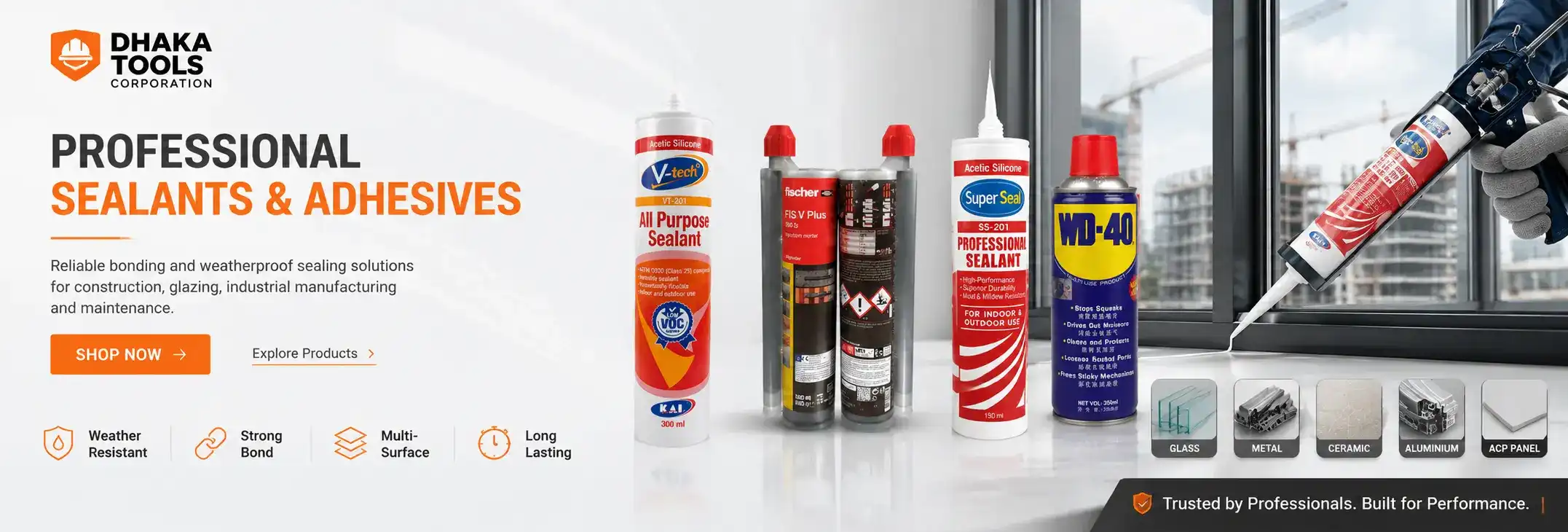
Choosing the wrong sealant is one of the most common — and most expensive — mistakes on construction sites and factory maintenance jobs in Bangladesh. A joint that fails after six months means rework, water damage, and unhappy clients. This guide explains, in practical terms, how procurement officers, engineers, and contractors can select the right silicone sealant for the job.
What Is a Silicone Sealant and Where Is It Used?
A silicone sealant is a flexible, rubber-like compound used to seal joints and gaps against water, air, and dust. Unlike rigid fillers, cured silicone stays elastic, so it can absorb movement between materials — which is why it is the standard choice for glass, aluminium, sanitary fittings, cladding, and expansion joints.
In Bangladesh, silicone sealants are used every day in curtain-wall and thai-aluminium glazing, bathroom and kitchen installation, roofing and waterproofing repairs, HVAC ducting, signboard fabrication, and general factory maintenance.
Acetic vs Neutral Cure: The First Question to Ask
Most sealant problems start with using the wrong cure type. There are two main families:
- Acetic (acetoxy) cure — cures fast, bonds strongly to glass and glazed surfaces, and has a vinegar-like smell while curing. Best for glass-to-glass and glass-to-aluminium glazing work. Not recommended directly on concrete, marble, or metals that can corrode.
- Neutral cure — cures with almost no odour and without releasing acid, so it is safe on concrete, masonry, natural stone, mirrors, and sensitive metals. Preferred for construction joints, cladding, and exterior weatherproofing.
Rule of thumb: for glazing and glass work, acetic cure is effective and economical; for concrete, stone, metal frames, or exterior facades, choose neutral cure.
Key Factors to Compare Before Buying
1. Substrate (what you are sealing)
Glass, aluminium, uPVC, concrete, tiles, and steel each behave differently. Always match the sealant’s recommended substrates on the datasheet with your actual surfaces.
2. Indoor vs outdoor exposure
Outdoor joints in Bangladesh face intense UV, monsoon rain, and high humidity. Use a weatherproof, UV-resistant grade for any exterior application — an interior-grade sealant will chalk, crack, and peel outdoors.
3. Joint movement
Expansion joints and curtain-wall joints move with temperature. Check the movement capability on the technical datasheet before specifying a sealant for structural or facade work.
4. Sanitary / anti-fungal grade
For bathrooms, kitchens, and food-processing areas, choose a sanitary grade with anti-fungal additives; otherwise black mould will appear along the joint within months in our humid climate.
5. Genuine product supply
Counterfeit and refilled cartridges are a real problem in the local market. A fake sealant may look identical but fail within weeks. Buy from a supplier who sources genuine stock and can provide the brand’s technical datasheet on request.
How Much Sealant Do You Need?
A standard 280–300 ml cartridge typically covers 10–12 linear metres for a 5 mm × 5 mm joint. Wider joints consume dramatically more: a 10 mm × 10 mm joint uses roughly four times the material. For project procurement, calculate total joint length first, then add a 10–15% wastage allowance.
Sealant Brands Available at Dhaka Tools Corporation
We stock genuine professional-grade sealants and adhesives, including Super Seal and V-Tech ranges, along with supporting products such as epoxy adhesives and contact cleaners for surface preparation. Browse the full sealant collection here.
Application Tips for a Long-Lasting Seal
- Clean and dry the joint completely — dust and moisture are the main causes of adhesion failure.
- Use masking tape for straight, professional edges.
- Cut the nozzle at 45° slightly smaller than the joint width.
- Tool (press) the bead within 5 minutes so the sealant wets both surfaces.
- Allow full cure — typically 24 hours per 2–3 mm of depth — before exposing the joint to water.
Frequently Asked Questions
Which silicone sealant is best for glass work?
For glass-to-glass and glass-to-aluminium glazing, a professional acetic-cure silicone gives fast curing and excellent adhesion. For structural glazing or facade joints, consult the manufacturer’s datasheet or ask our technical team.
Can I use one sealant for everything?
No. Cure type, movement capability, and UV resistance differ by grade. Using a general-purpose interior sealant outdoors, or an acetic sealant on concrete, leads to early failure.
How long does silicone sealant last?
A genuine, correctly applied professional-grade silicone typically lasts many years even outdoors. Most premature failures come from counterfeit product, wrong grade selection, or poor surface preparation.
Where can I buy genuine silicone sealant in wholesale quantity in Dhaka?
Dhaka Tools Corporation supplies genuine sealants at wholesale and project pricing with nationwide delivery. Request a quotation or call +8801882395659 for bulk rates and technical guidance.
Get a Wholesale Quotation
Buying for a project, factory, or resale? Send us your required quantity and application details — our team will respond with a professional quotation, availability, and delivery timeline. Request a quotation or contact us today.